Role
Senior Product Designer
Led the design from service definition and MVP planning through validation, delivery, and launch.
Premium membership service · Harrods China
Designing the service model, member journey, and clienteling tools that make every high-touch interaction feel considered, personal, and connected.
Role
Led the design from service definition and MVP planning through validation, delivery, and launch.
Timeline
From the first Shanghai release through Beijing reuse and the phase-two member proposal.
Status
Shanghai launch · Beijing reuse · Phase-two member proposal
Collaboration & delivery
Team
I led product and service experience design, mentoring a junior designer who supported selected wireframes, research synthesis, and meeting notes.
Worked with UK Harrods stakeholders, the Shanghai Residence manager, personal shoppers, and an IBM team spanning product, consulting, architecture, engineering, and QA.
Delivery
Service model · Two-sided journey
MVP scope · Operational workflows
Prototyping · User testing
iPad workspace · Launch
How I contributed
As the Senior Product Designer, I translated Harrods’ private-retail concept into an operational service connecting the member journey, shopper workflows, and back-office delivery.
I owned
I collaborated on
Outcome
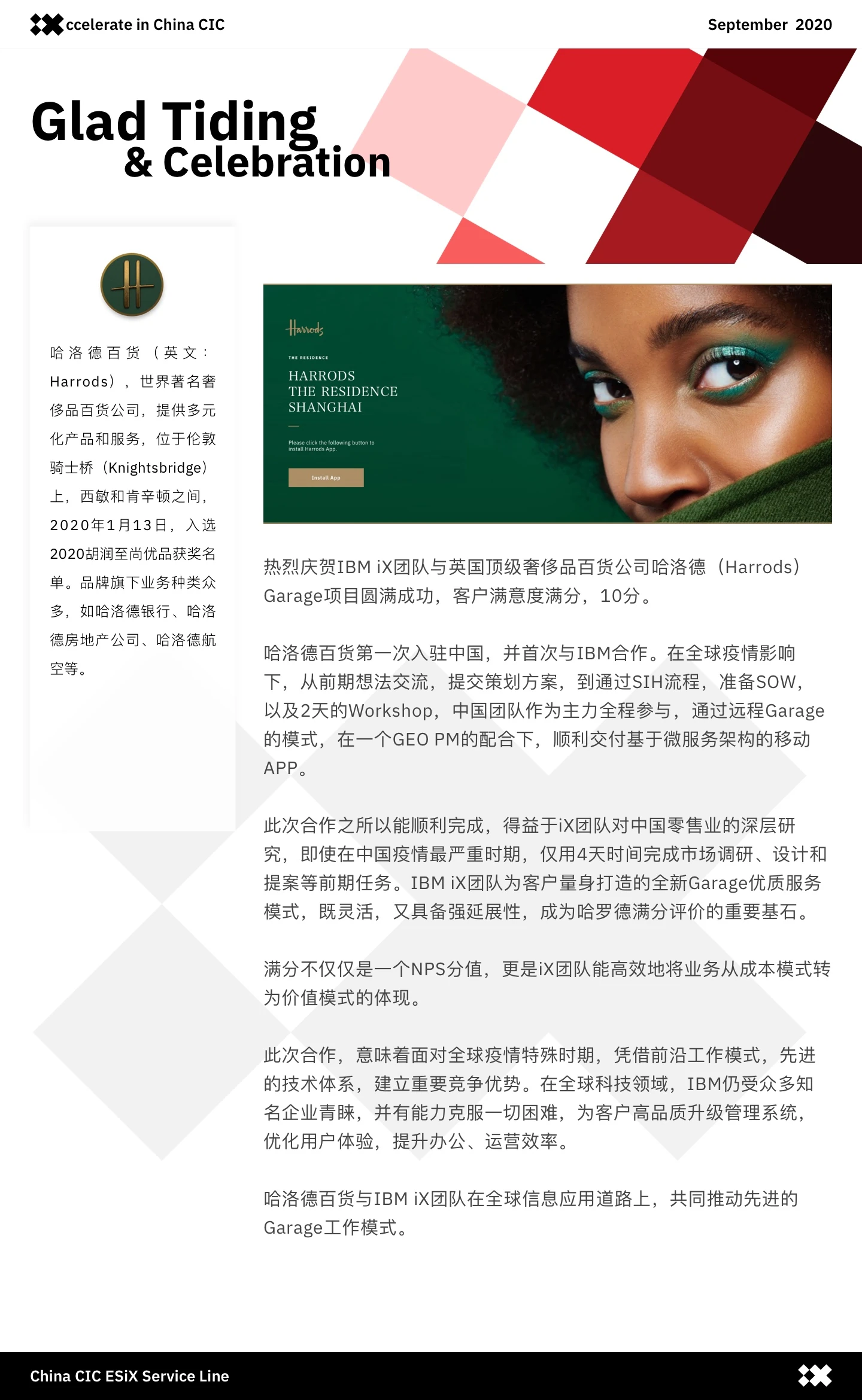
The product launched at the Shanghai Residence for approximately 20 managers and personal shoppers. The same service and operational system was later reused in Beijing, and the engagement continued into a phase-two member experience proposal.
Frame the challenge
Research-led opportunity
As the pandemic disrupted high-end retail, Harrods Shanghai created The Residence Garage: a private retail villa for high-value clients. The engagement began by defining a service model and operating system—not simply an app—for a more personal, lower-density way to shop across brands.
The changing context
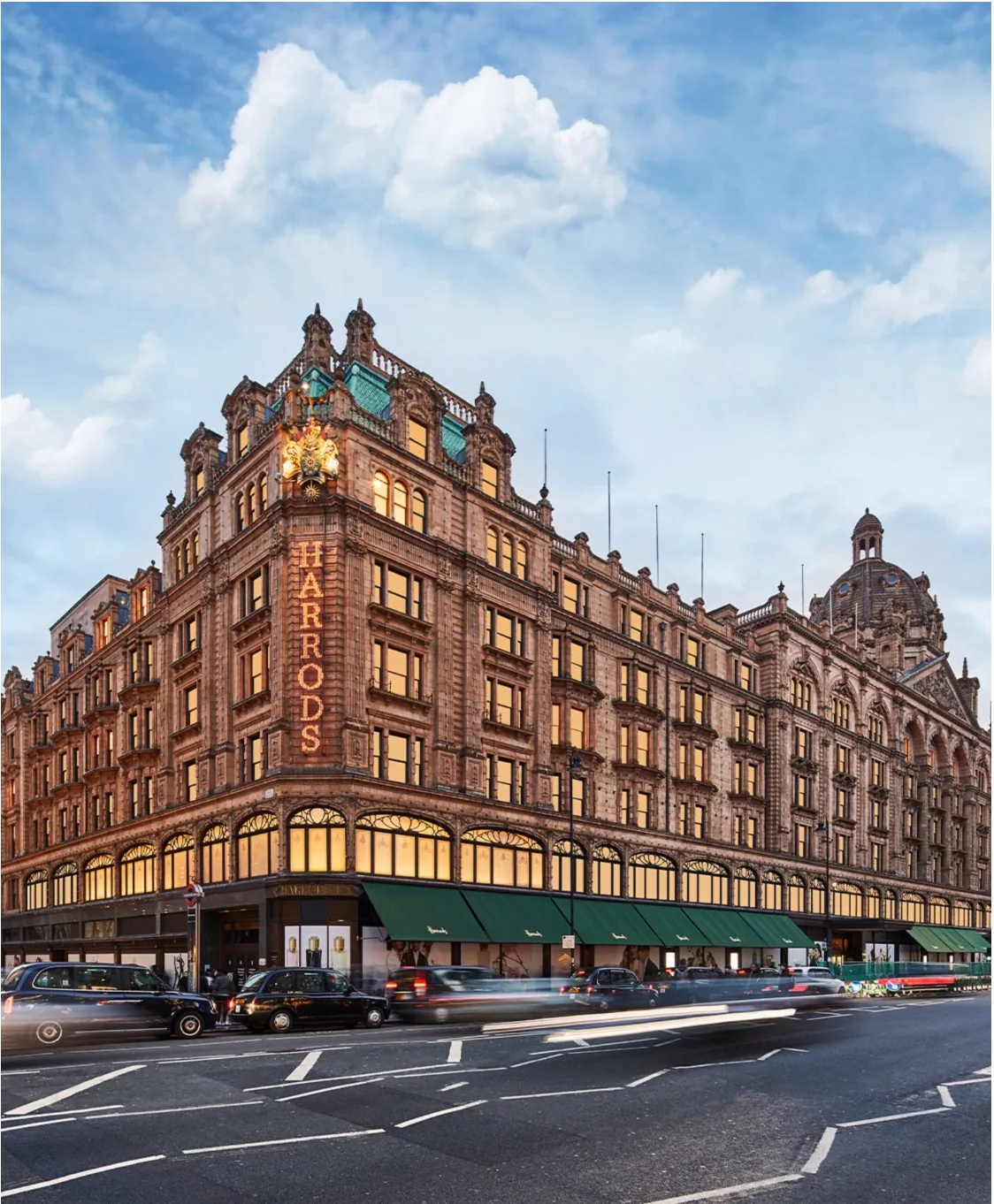
As cross-border travel paused, Harrods could no longer rely on London visits as the primary moment of connection for clients in China.
High-value clients often had to travel between individual brand stores to see a seasonal edit. The Residence created one calmer place to bring that discovery together.
The service proposition
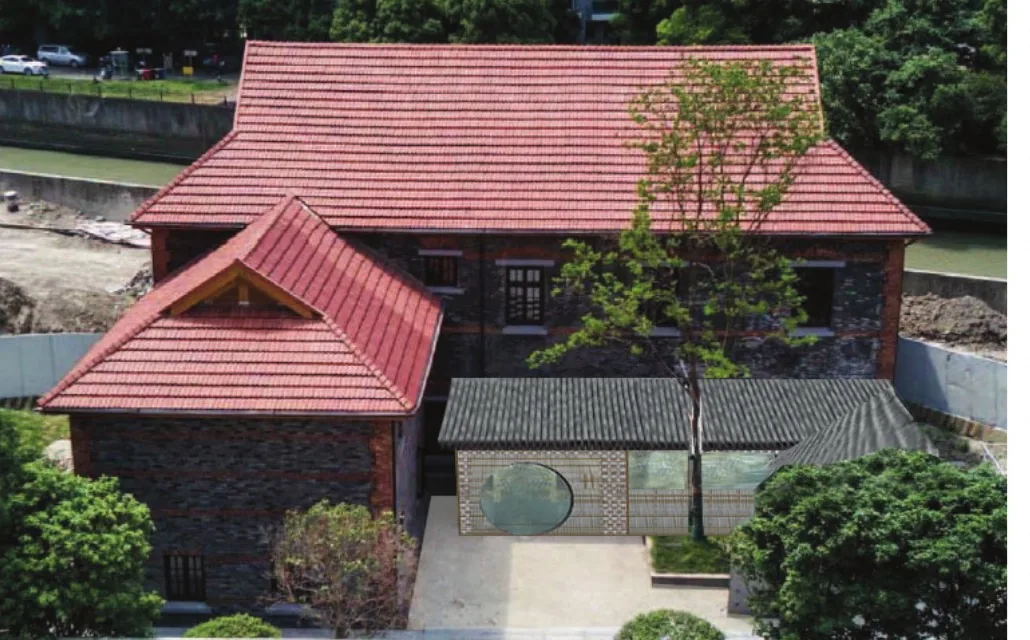
The Residence Garage proposed an appointment-led Shanghai setting where service could be tailored around each client rather than a shop-floor transaction.
Before each visit, the team could source selected pieces from partner brands, bring a client’s preferred labels together, and return unpurchased items afterwards—creating a high-touch, asset-light retail model.
Define the service
Two-sided journey
The consulting work defined the service blueprint before the interface: how a client's preference becomes a cross-brand edit, a prepared Residence appointment, and either a completed sale or a tracked return.
Residence team
Translate client preferences into brand requests, product allocation, and one prepared appointment.
Member
Choose a private visit and share the brands, pieces, and seasonal collections worth exploring.
Residence team
Bring a cross-brand selection together, support the fitting, update the client record, and complete payment.
Member
Explore a personal edit across brands in a private setting instead of travelling from store to store.
Residence team
Confirm the sale, return unpurchased pieces to partner brands, and keep operations and reporting traceable.
Member
Leave with the right pieces and a relationship that stays connected beyond the appointment.
Co-create the MVP
Mural workshop
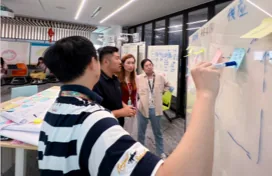
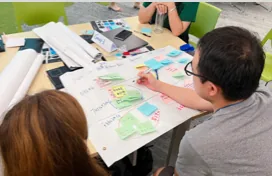
Working with Harrods stakeholders, we used the workshop wall to make service hand-offs, cross-brand allocation and return rules, MVP priorities, user stories, and front-to-back-system implications concrete.
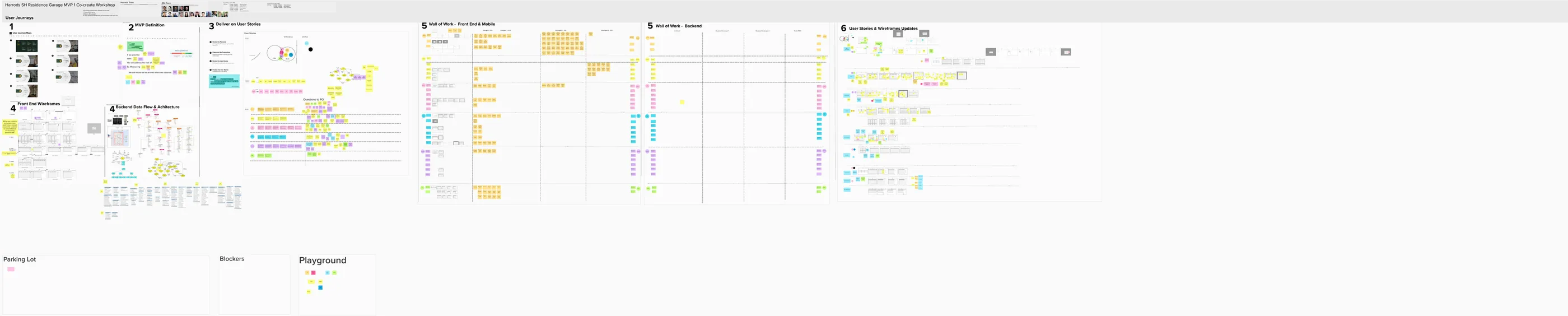
Surface the operating moments shared between the advisor and the member.
Turn the most important client, product-allocation, and return moments into a prioritised product scope.
Align front-end service flows with the cross-brand information, return rules, and back-office actions that support them.
User stories & service storyboards
 1
1 2
2 3
3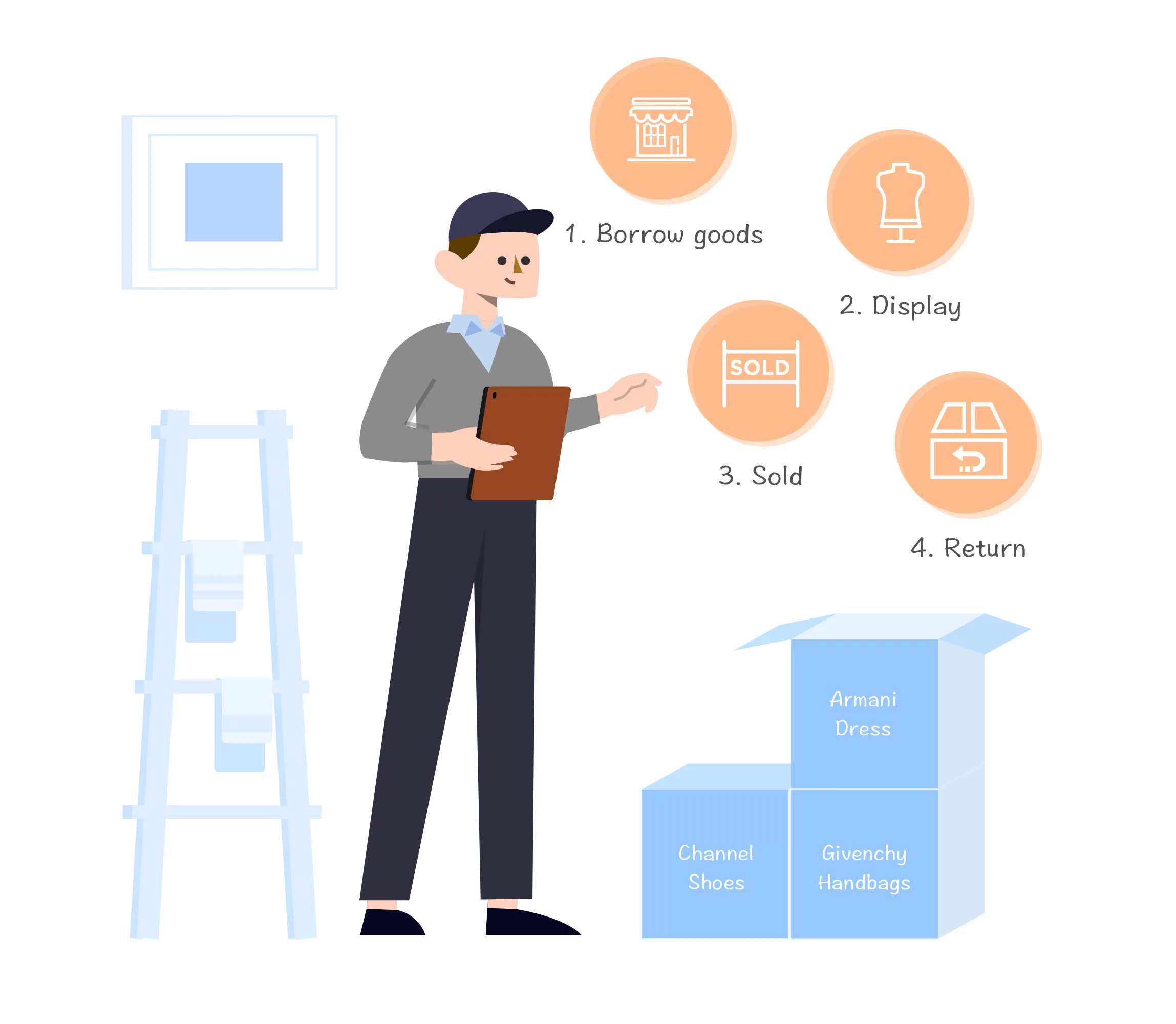 4
4 5
5 6
6 7
7 8
8Prototype & iterate
Low-fidelity interface
We translated the service decisions into the core tasks the Residence team needed to run every day—from cross-brand product allocation through payment and return—keeping the early conversation on information, actions, and hand-offs.
Interface scope
Start in the shared service workspace.
View and update client information.
Track brand-supplied pieces that are available, on hold, or ready to return.
Prepare the client visit and product selection.
Run the in-person service moment.
Complete the order through the connected POS flow.
Review activity by date, shopper, and utilisation.
Manage users, brands, and spaces.
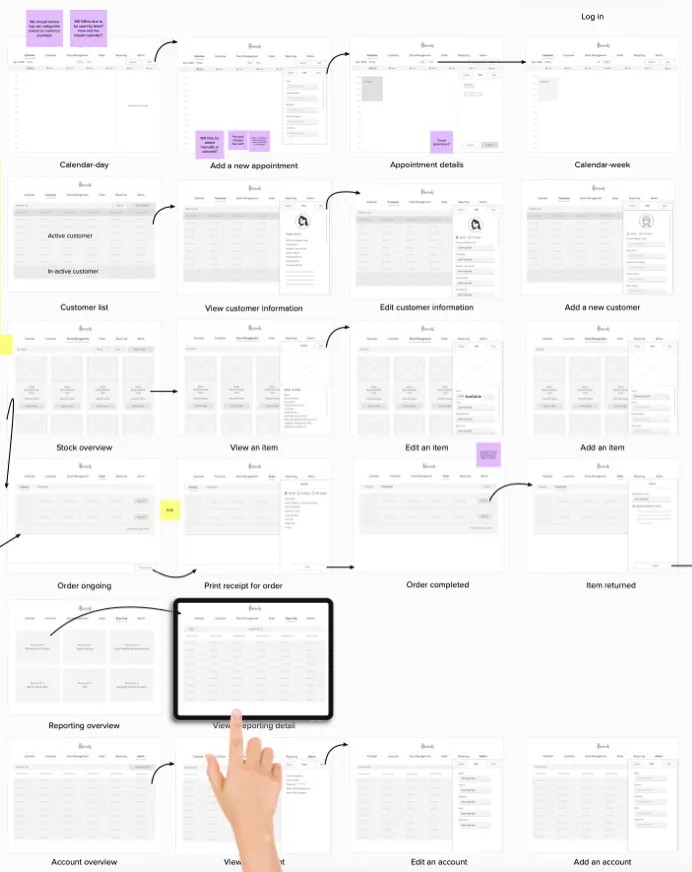
Wireframe flow
Each screen tested a practical part of the Residence operation—from sign-in and client context to stock returns, reporting, and administration.
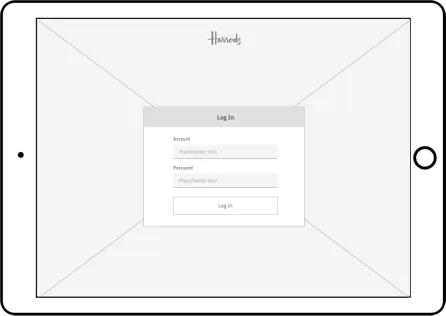
Log in
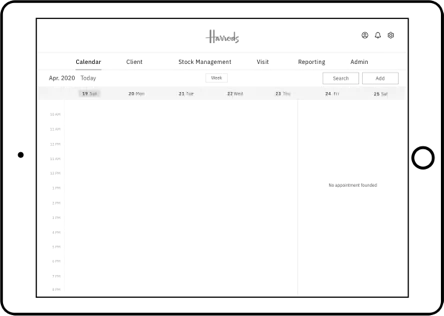
Calendar
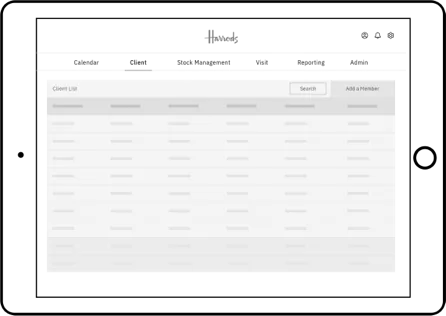
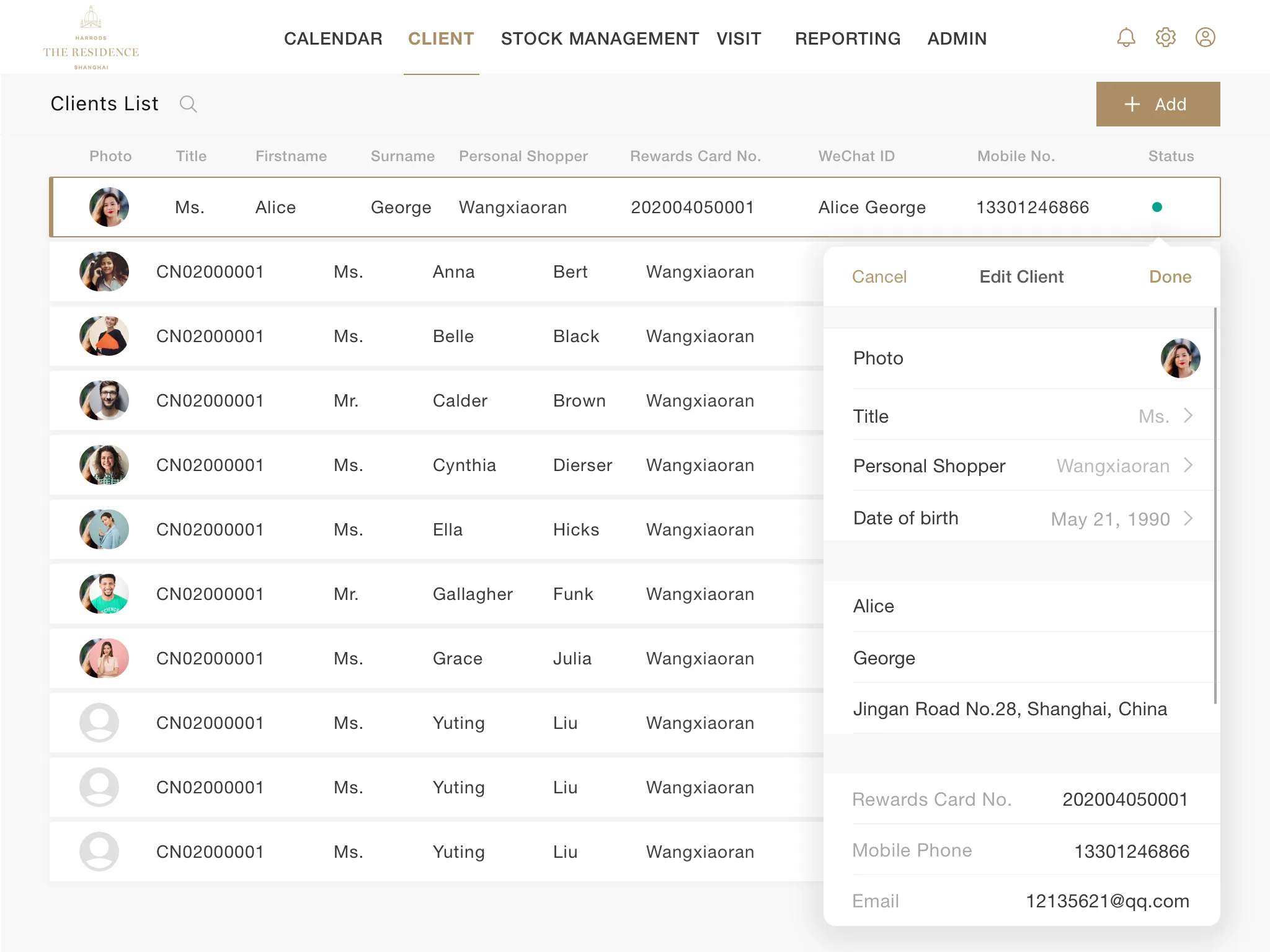
Client list
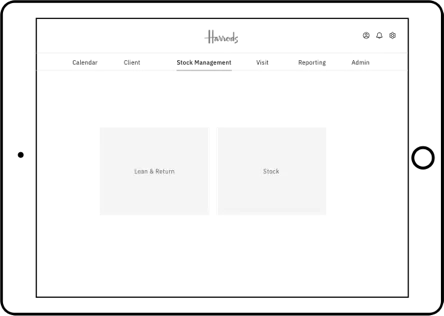
Stock operations
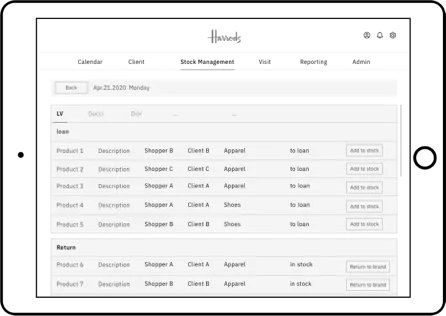
Loan & return
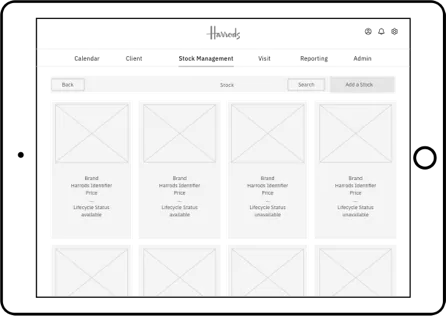
Product stock
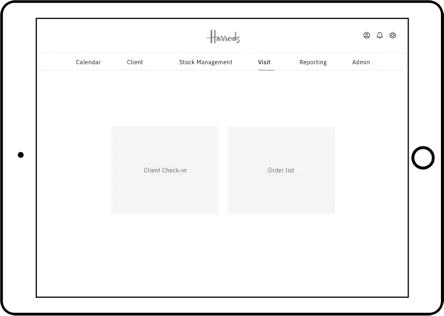
Visit
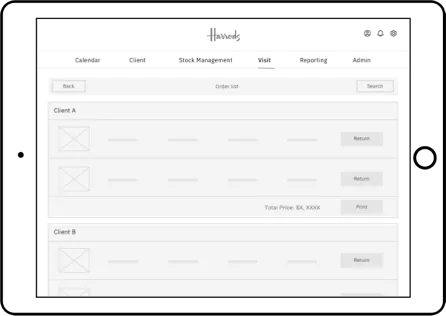
Order list
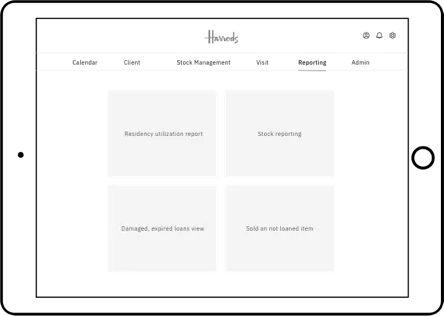
Reporting
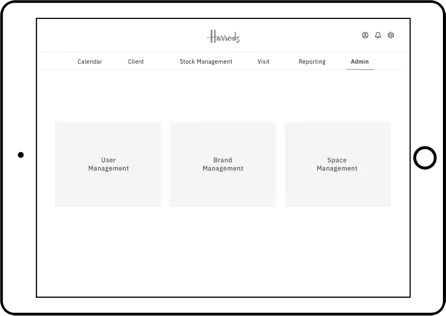
Admin
User testing
We used the clickable wireframes as a shared artefact for interviews, prototype walkthroughs, and wider feedback—testing whether the operational model felt coherent before moving into visual design.

Semi-structured interviews used the early flow to surface detailed questions around client context, appointments, and stock.
A second round tested a more functional version of the prototype and made the feedback more specific at each hand-off.
A structured survey invited a wider group to rate the clarity of the service flow and note the moments that still needed attention.
What the testing sharpened
The sessions confirmed the need for one continuous workspace: staff had to move from client context to appointment preparation, cross-brand product allocation, returns, and follow-up without losing the thread of the relationship.
Bring the system together
Shopper iPad application
One clear system supports the day from appointment preparation and cross-brand product allocation through payment and return—so the shopper can stay present with the client, not the admin.
The starting point
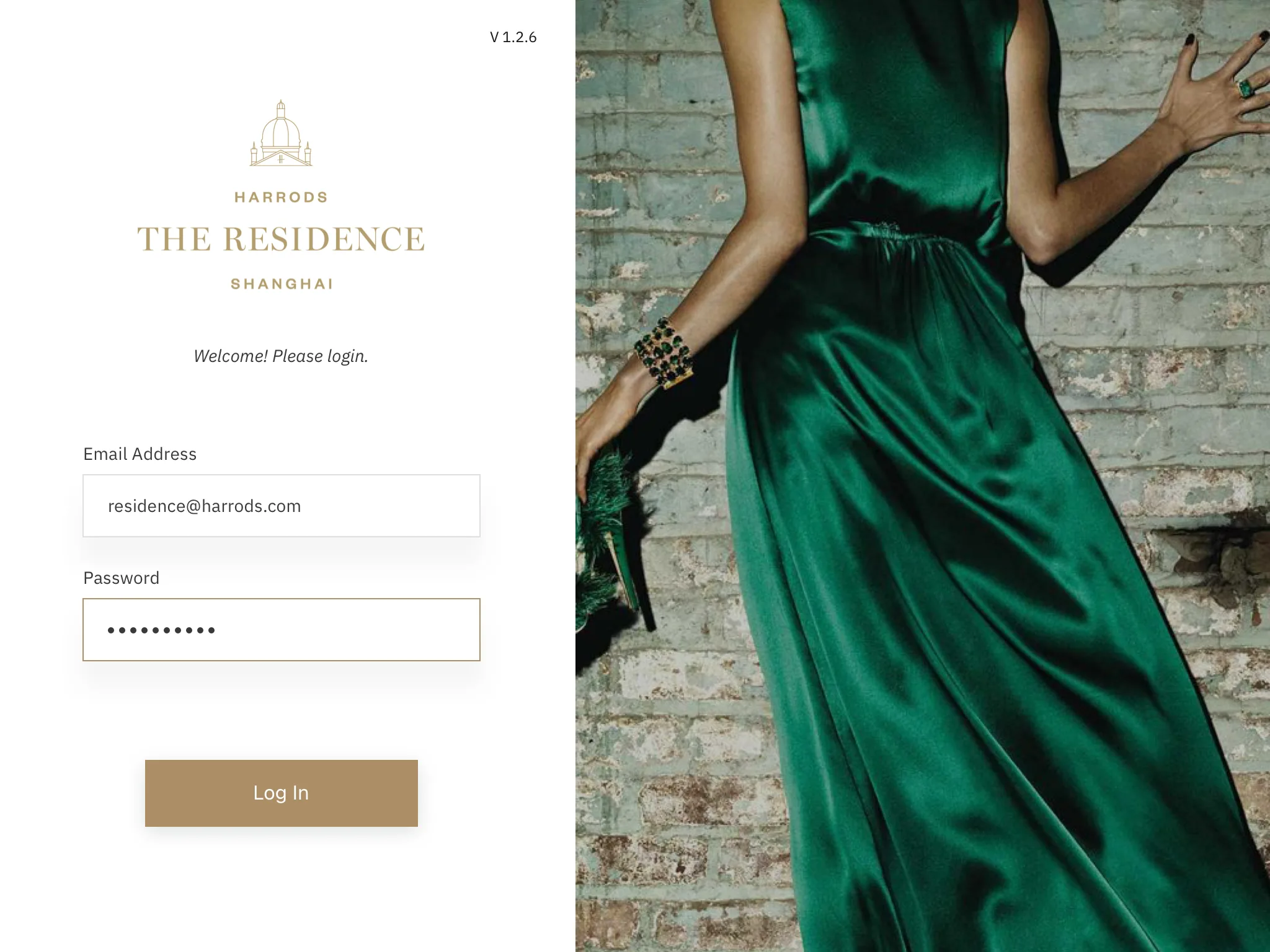
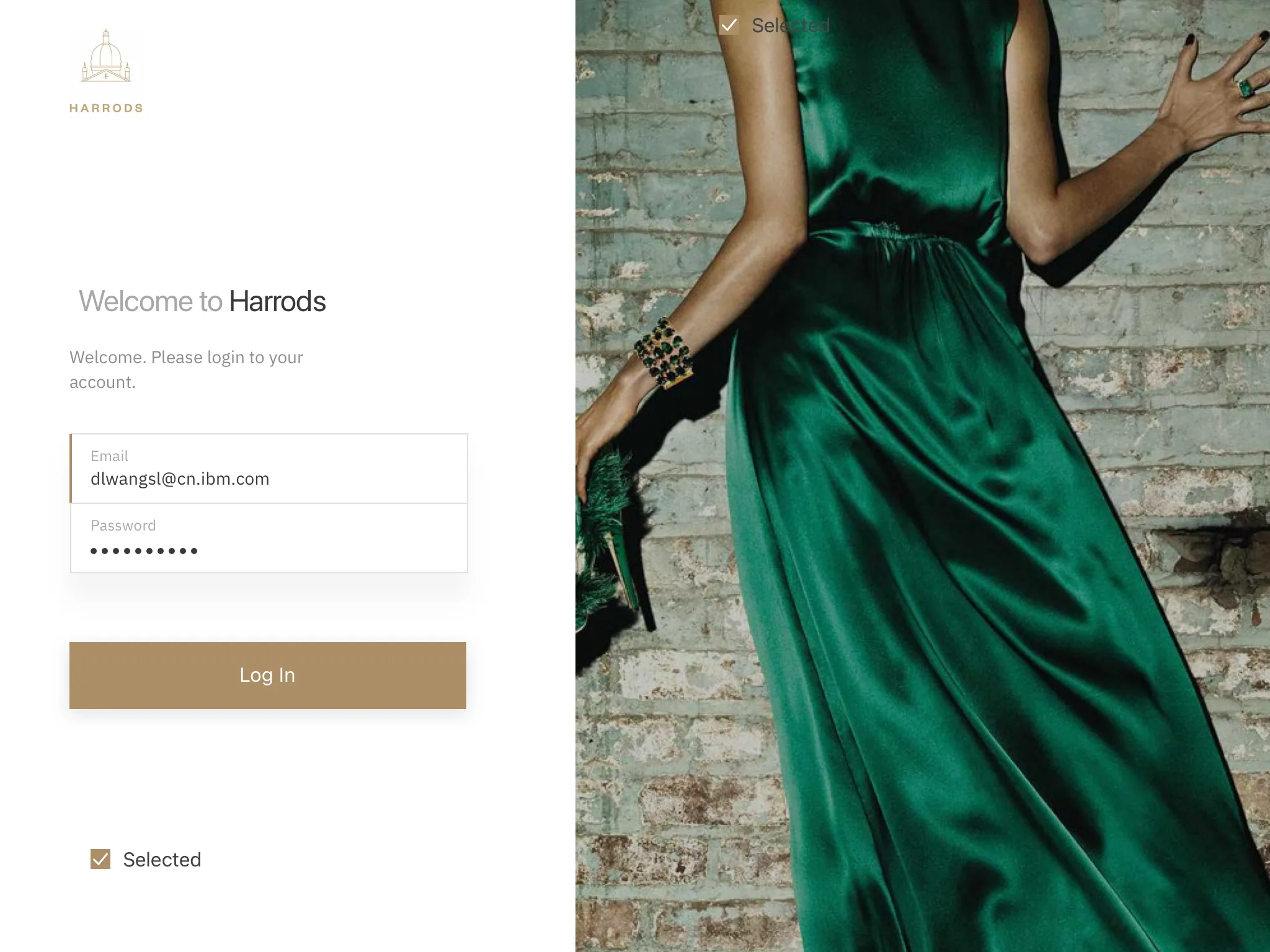
The launch, install, and sign-in screens establish a calm, recognisable entry to the shopper's iPad application.


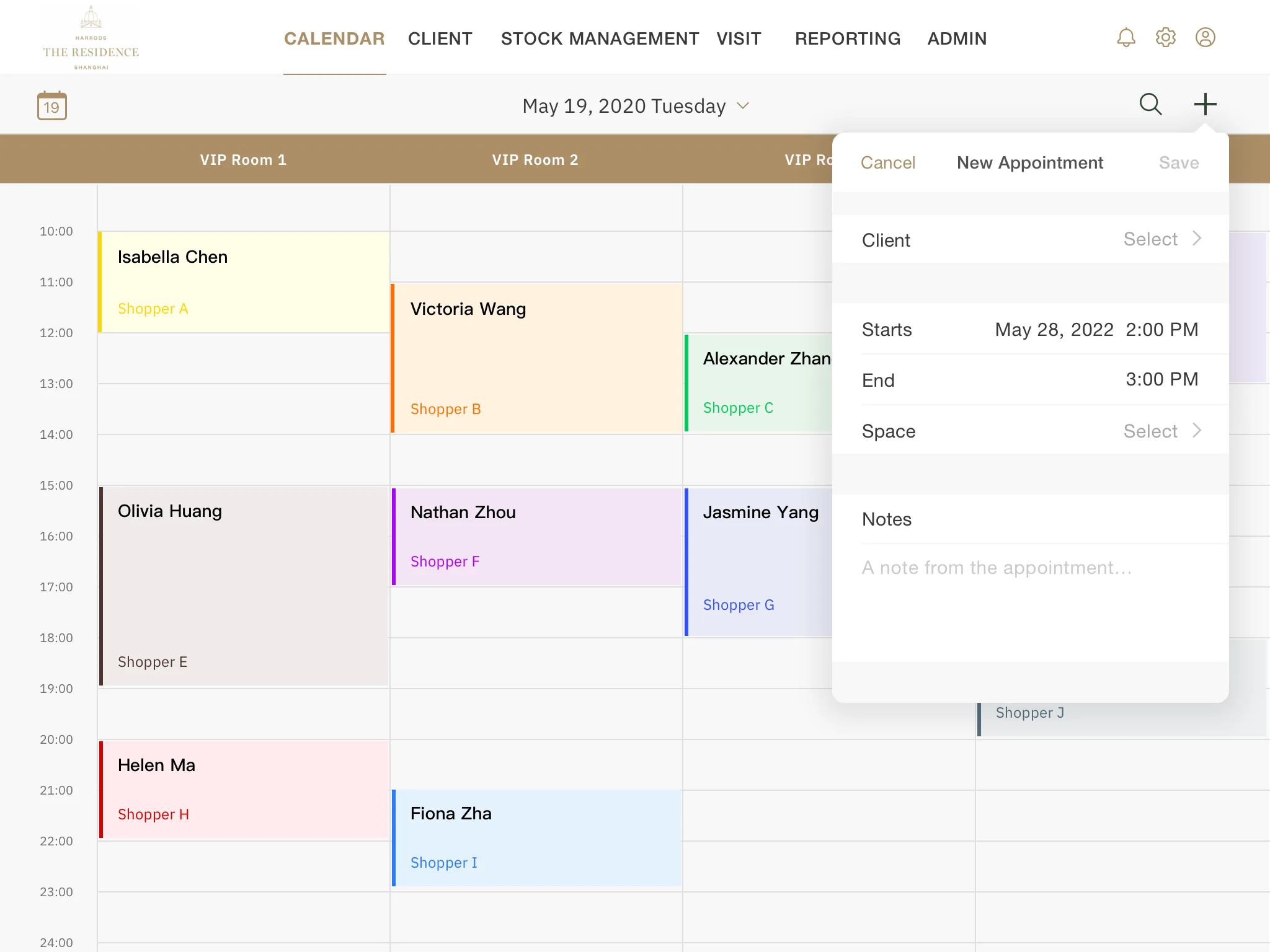
Appointment calendar
The shared calendar helps the shopper coordinate rooms, clients, and personal shoppers before each visit.
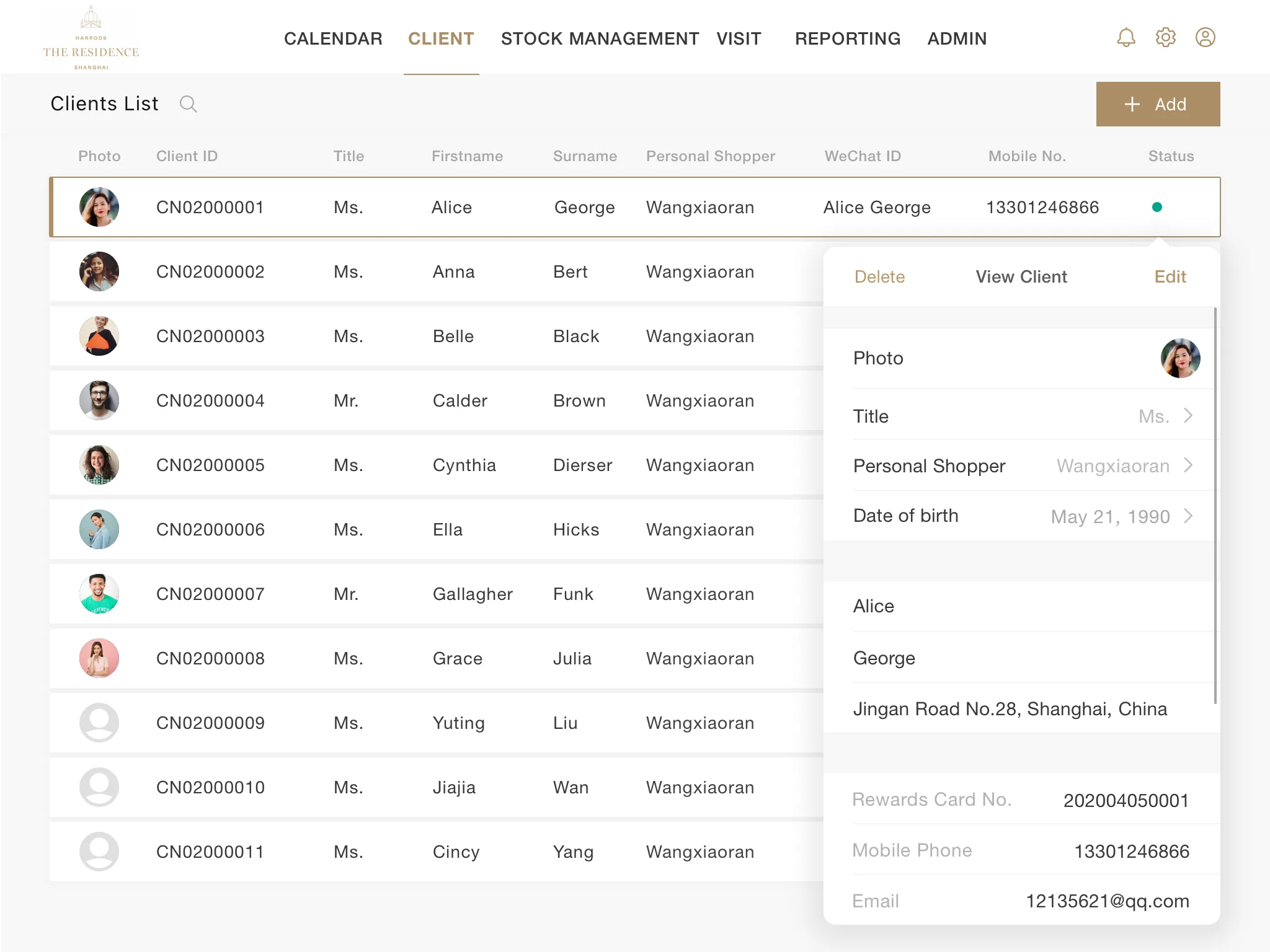
Client management
A focused client record keeps identity, preferences, and service details visible when the conversation moves quickly.
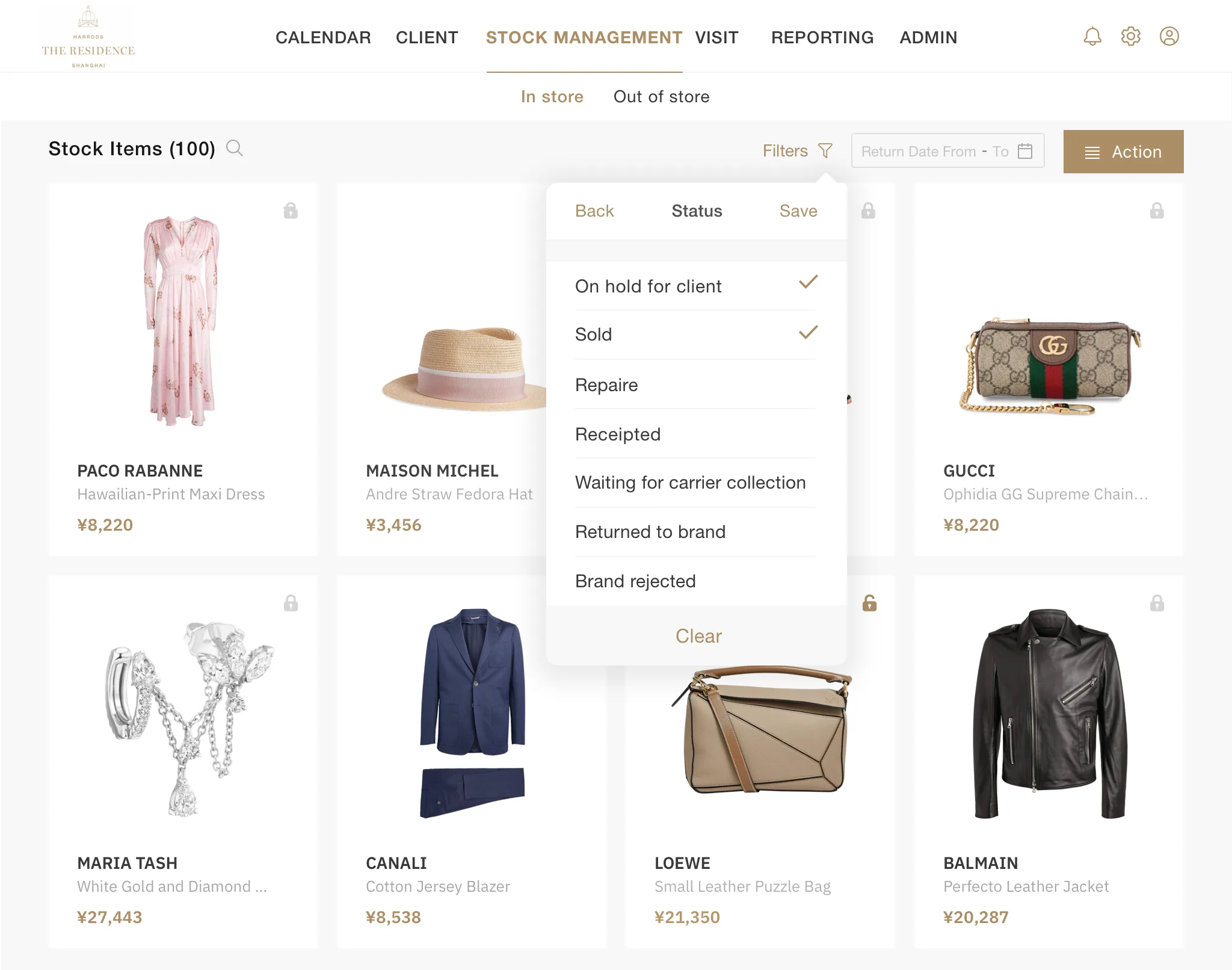
Stock management
Stock status and filters give the shopper a clear view of what is available from partner brands, on hold, or ready to return.
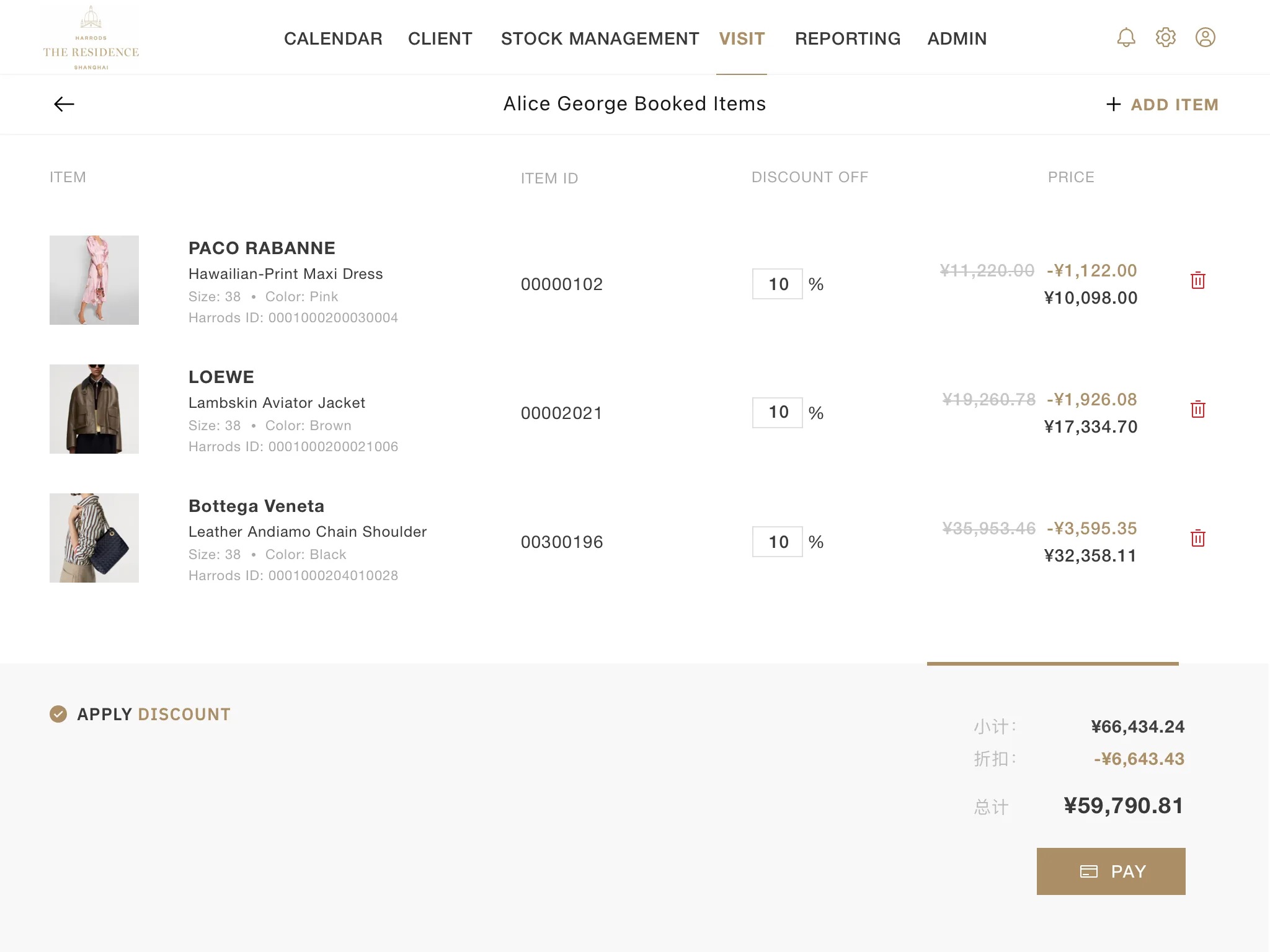
Visit & pay
Booked products, discounts, and payment stay in one place so the shopper can complete the purchase with the client.
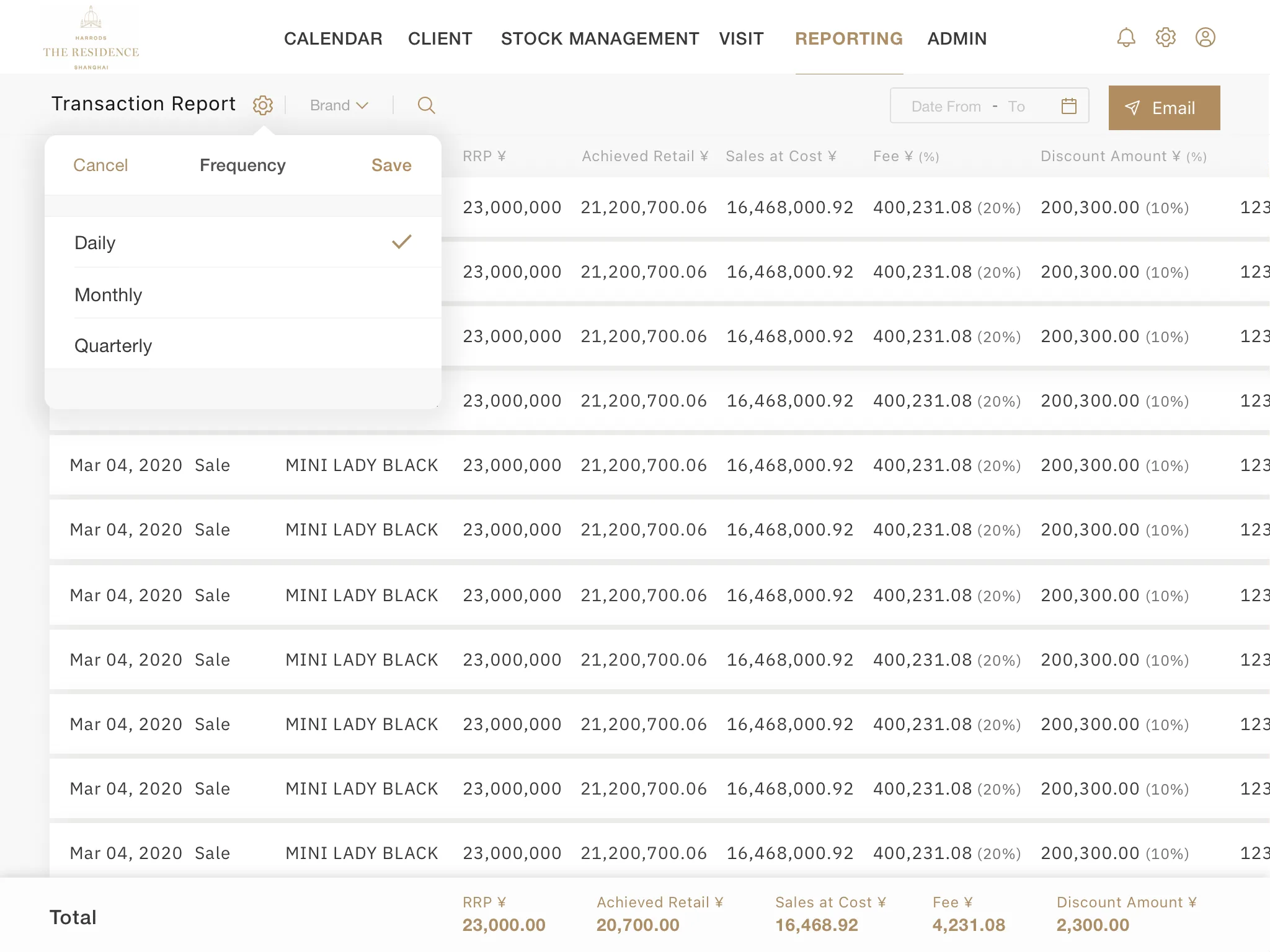
Reporting
Scheduled reports make performance, discounts, and activity easy to review without creating extra follow-up work.
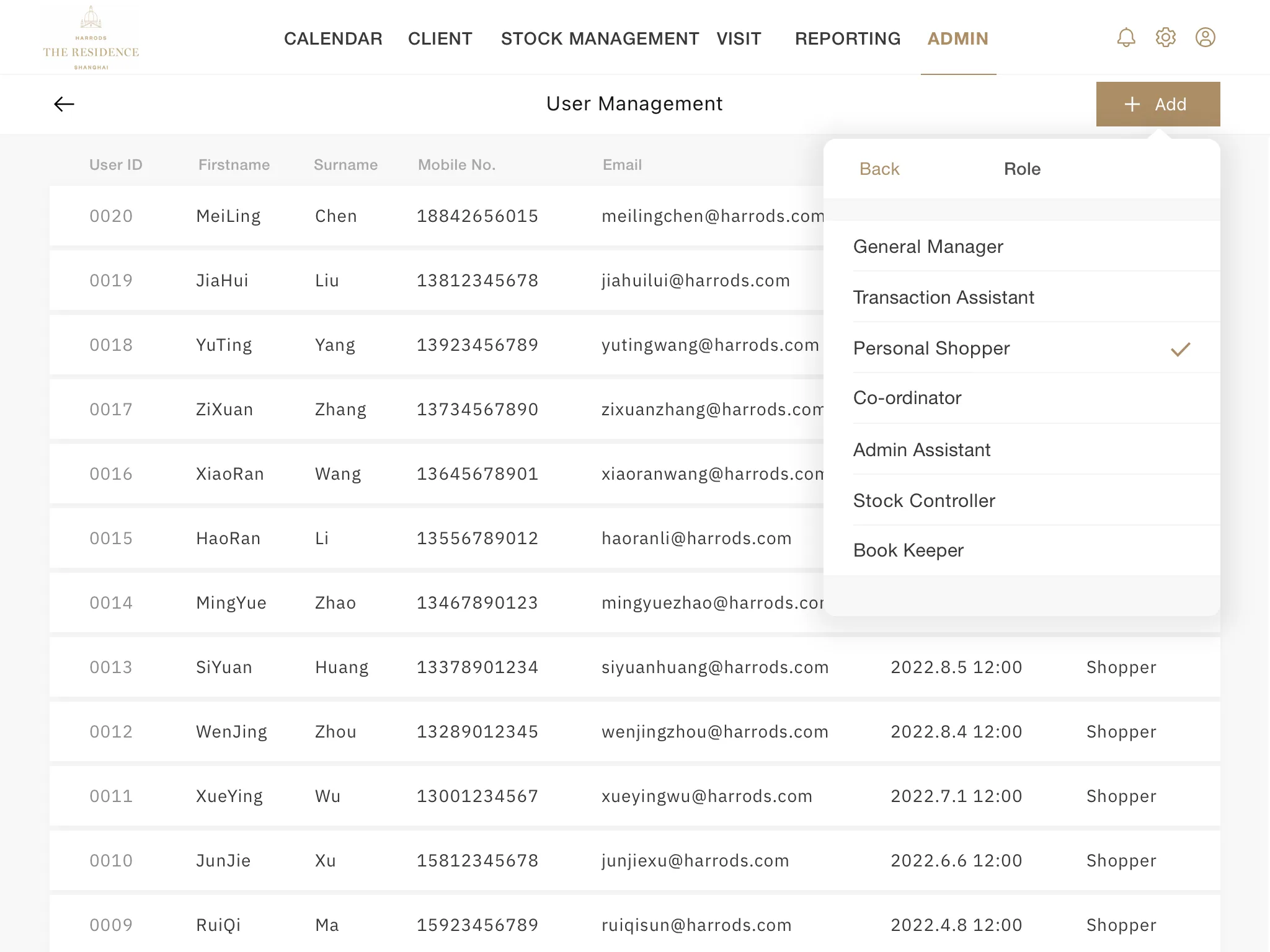
Admin & roles
User roles and permissions give each Residence a clear operating structure as the service team grows.
Design outcome
The direction
The Residence turns a cross-brand, asset-light retail concept into one service foundation across the member journey and the operational work that brings it to life.
Reuse the model
Shanghai → Beijing
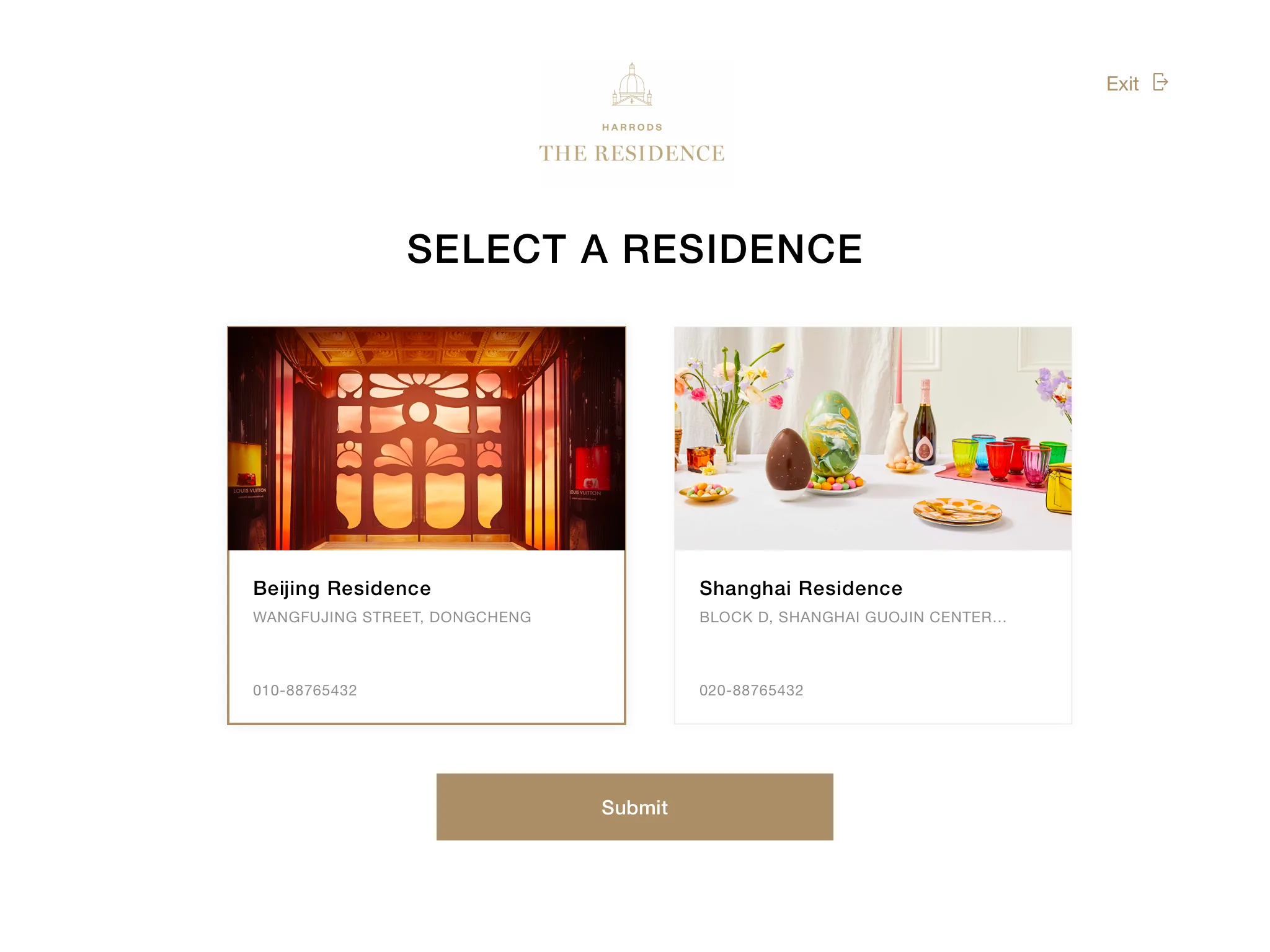
When Harrods later opened its Beijing Residence, the Beijing team reused this service and operational system—from curated allocation to return operations—without rebuilding the model.
Post-launch proposal
Extension of the service model
A later proposal extended the Residence's high-touch service into a native member experience—bringing personal curation, live discovery, and connected loyalty into the customer's everyday life.
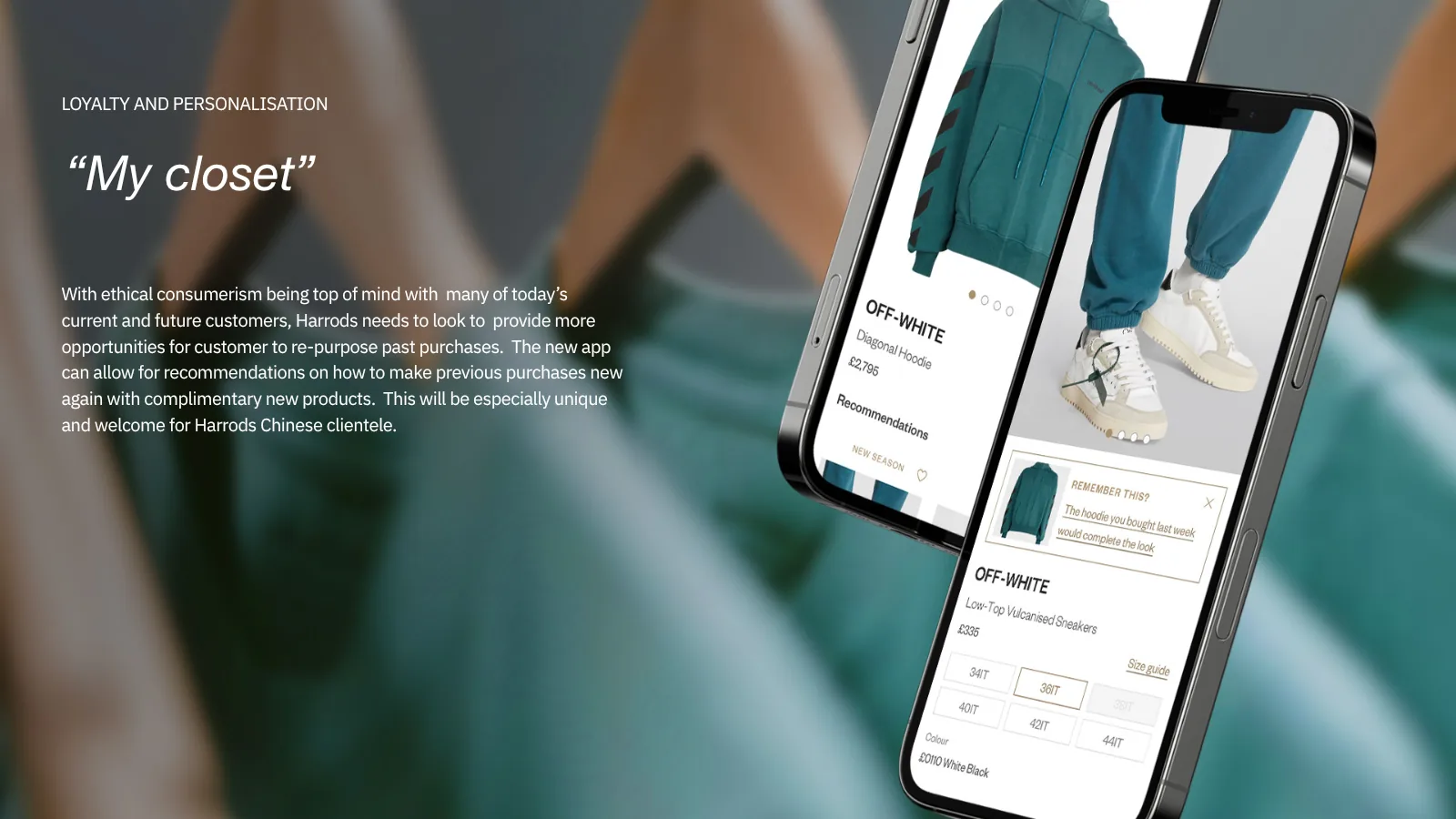
My closet
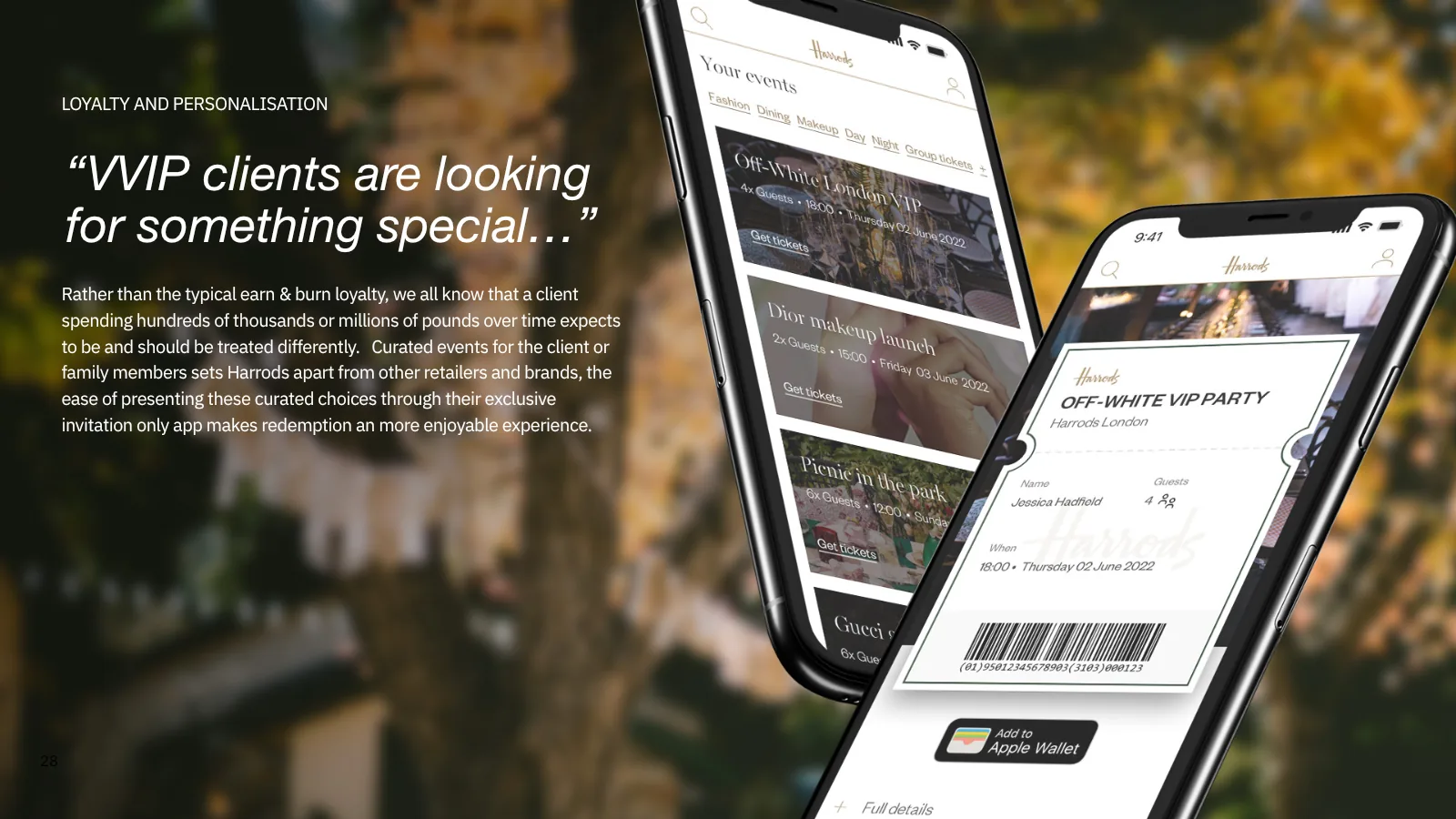
VIP discovery
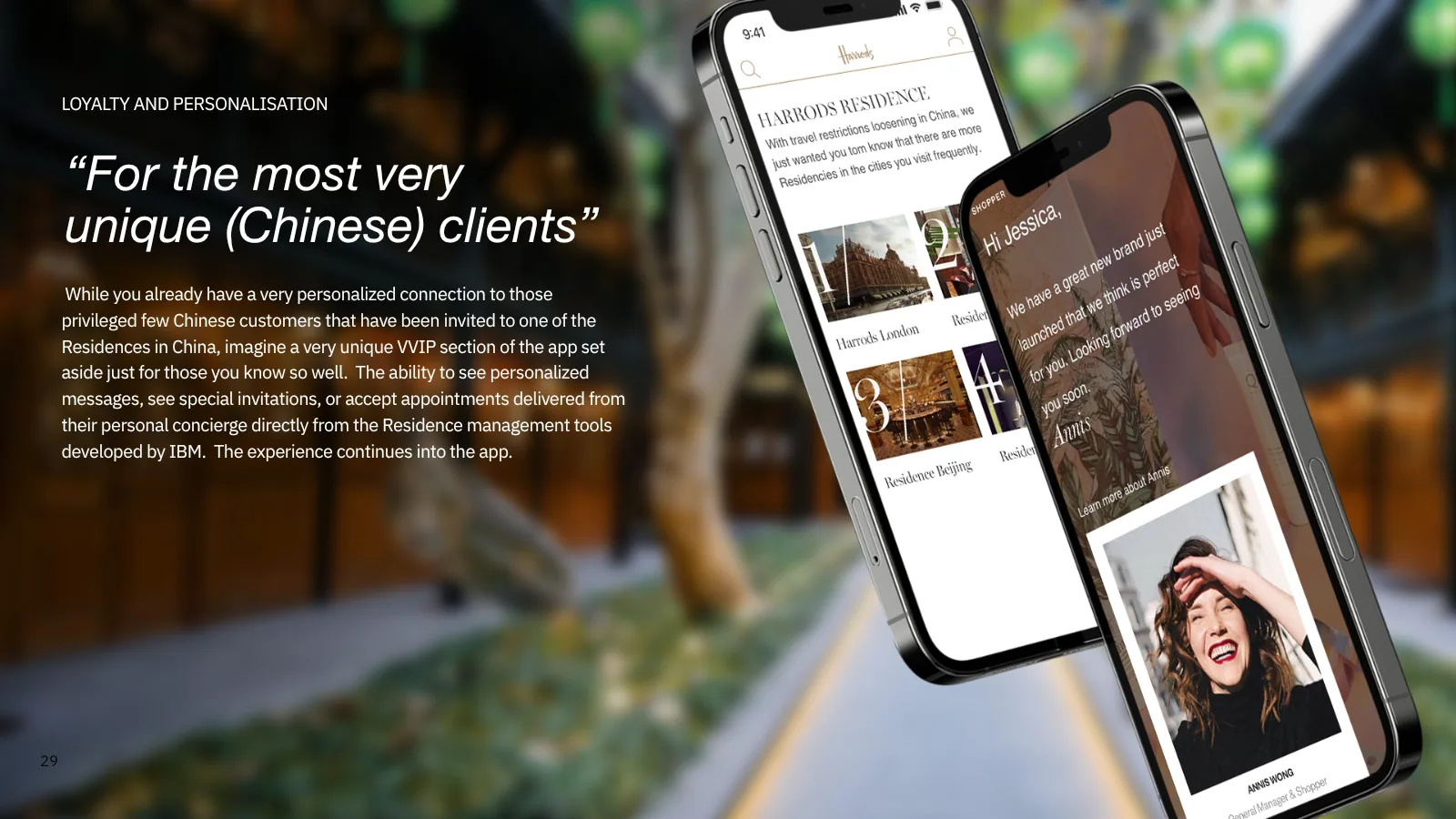
A uniquely Chinese experience
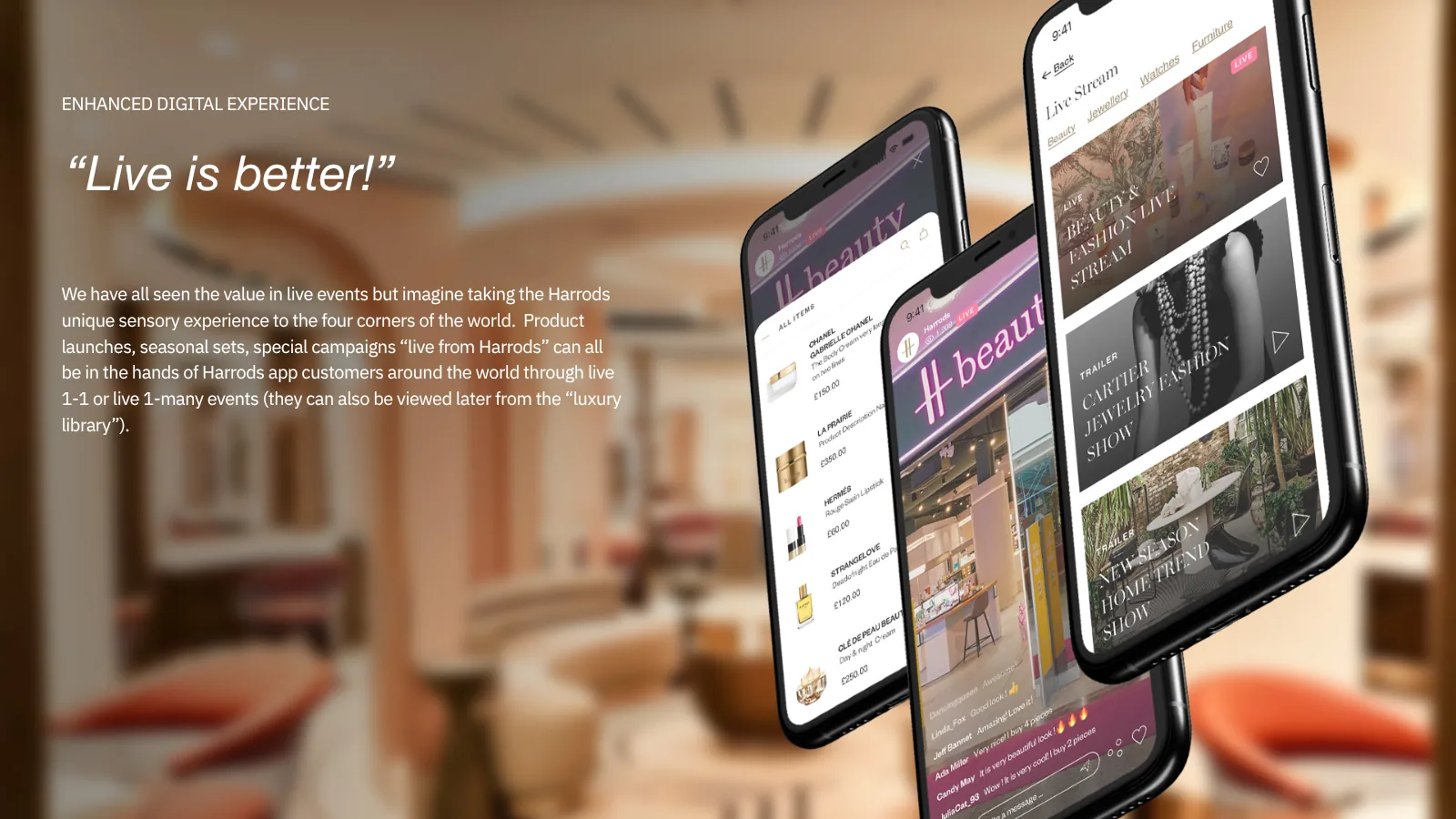
Live is better
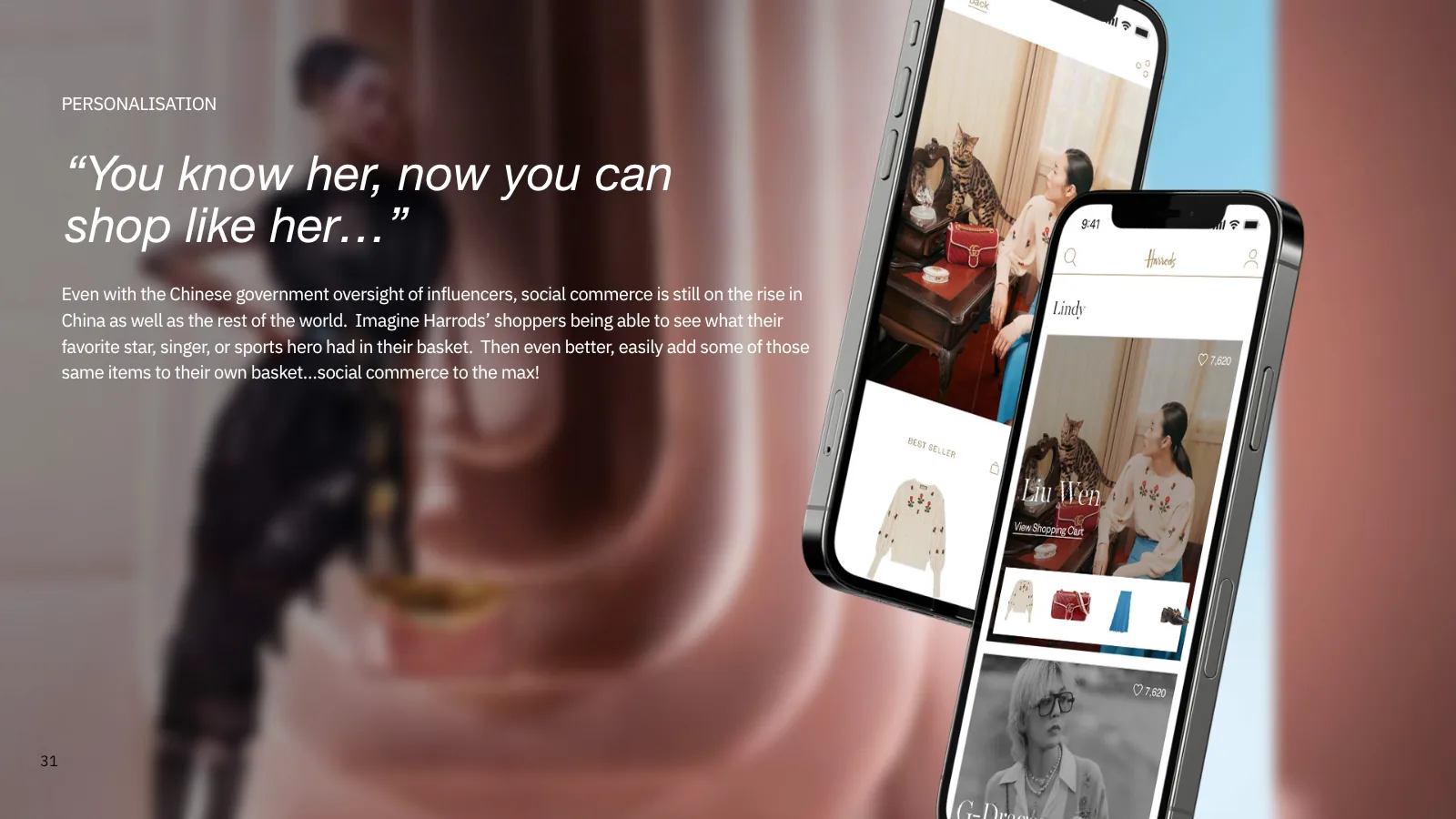
Recognise the member
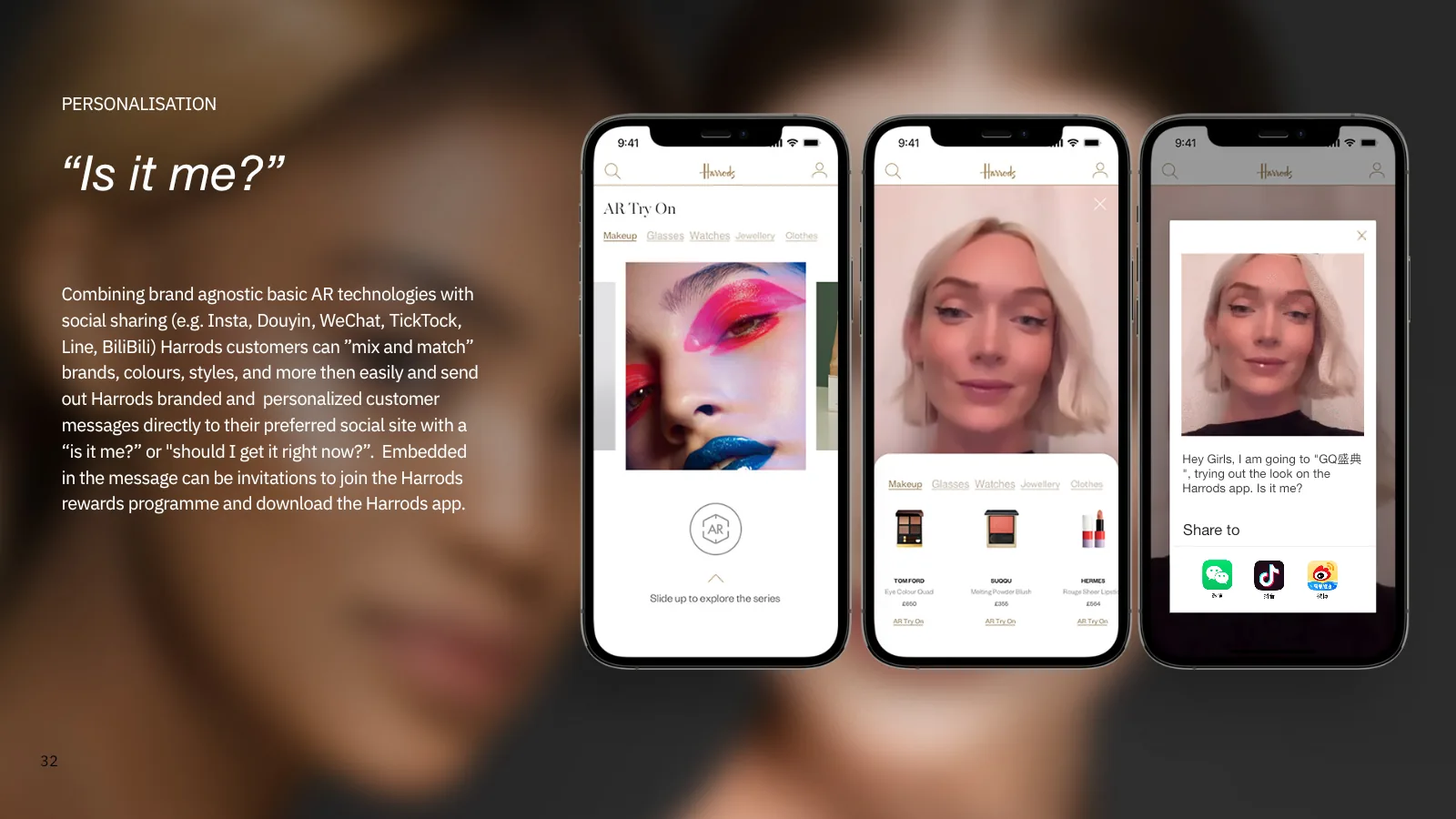
Is it me?

Information is knowledge
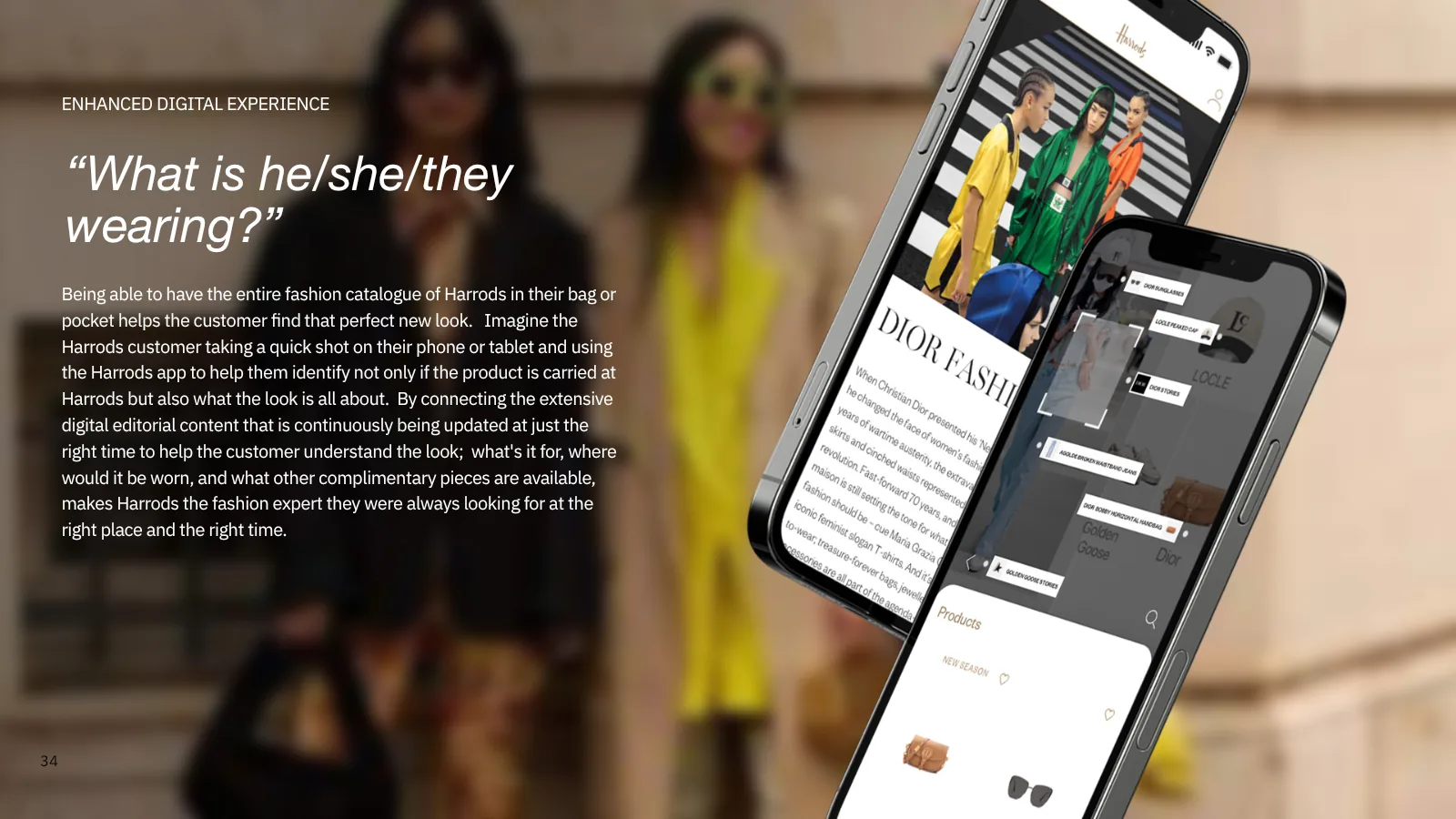
What are they wearing?
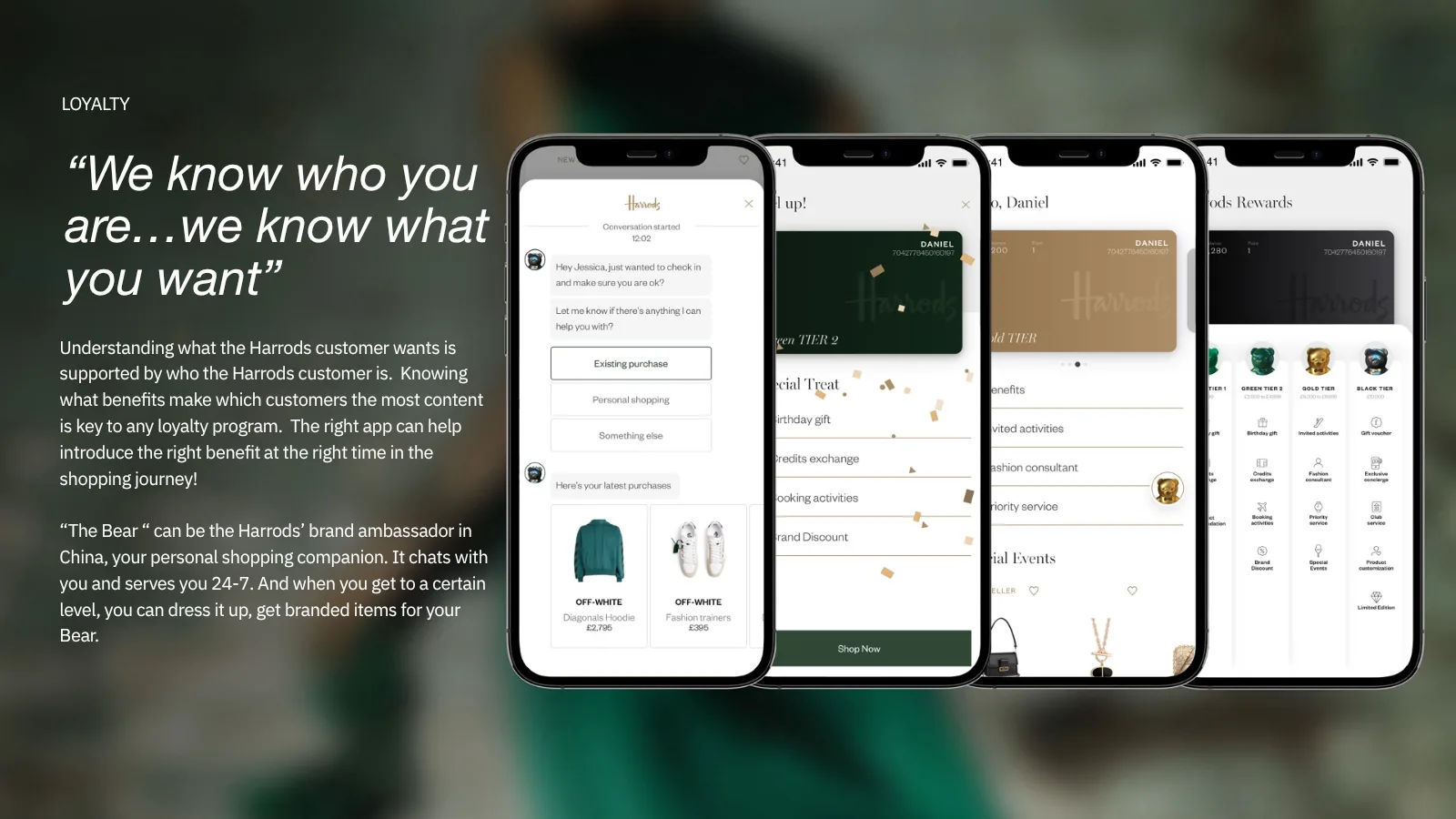
One connected relationship
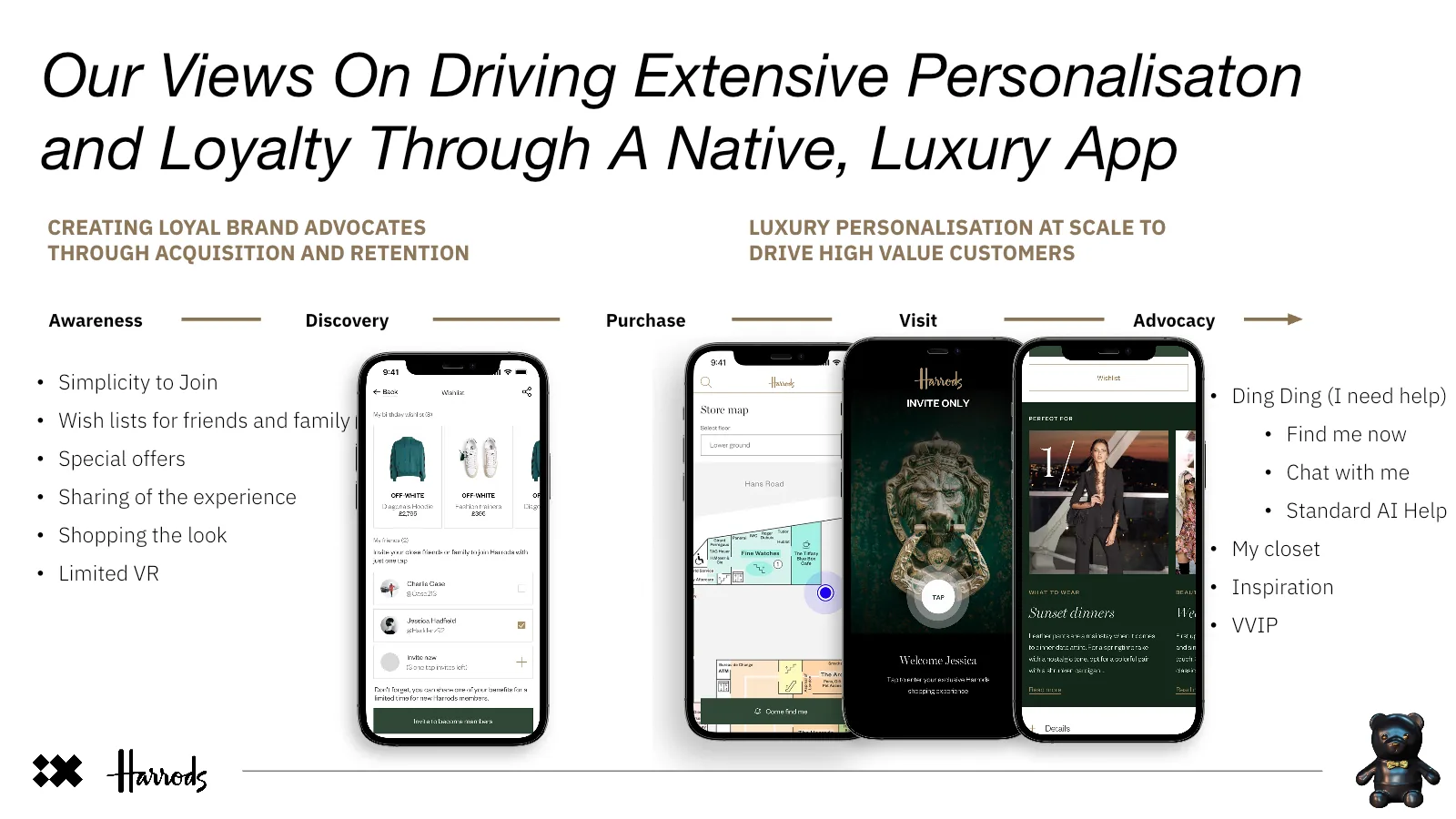
Native luxury, lasting loyalty
